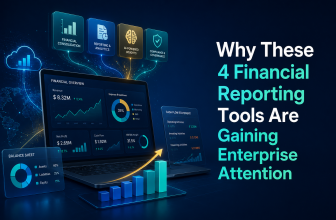
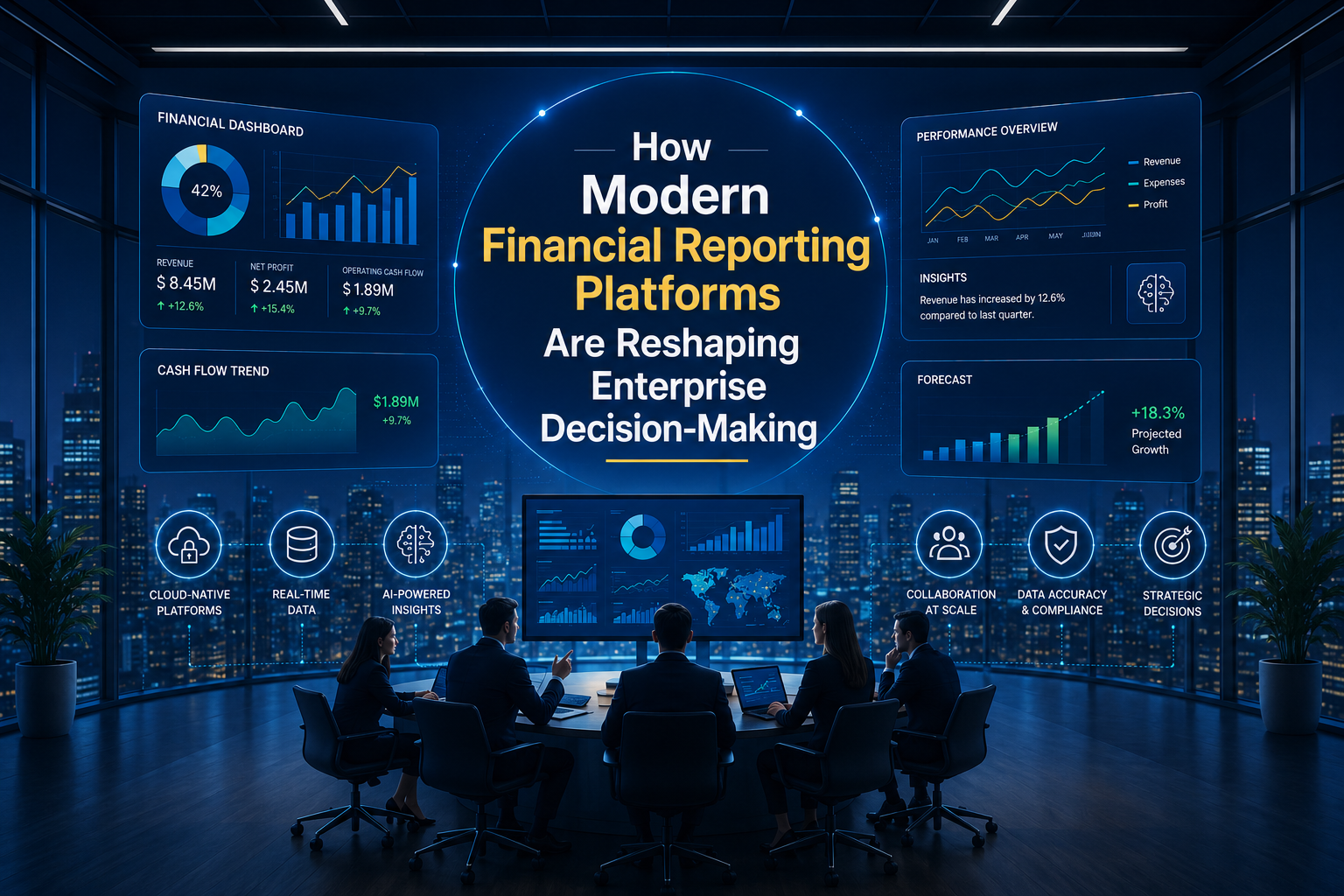
Financial reporting is no longer just about producing accurate balance sheets or monthly statements. Today’s finance teams are expected to deliver real-time insights, support strategic planning, identify emerging risks, and help leadership make faster decisions in an increasingly unpredictable business environment. As artificial intelligence reshapes enterprise software and CFOs demand greater agility, traditional reporting systems are beginning to show their limitations.
Recent industry trends reveal a growing shift toward AI-assisted financial planning, automated consolidations, cloud-native reporting platforms, and integrated analytics. Organizations are also looking beyond large enterprise vendors in search of solutions that offer greater flexibility, faster implementation, and modern user experiences. For many businesses, lesser-known platforms are proving just as capable—if not more innovative—than long-established names.
If your organization is evaluating its finance technology stack, these four financial reporting platforms deserve serious attention.
Datarails
Datarails has become one of the most interesting platforms for finance teams that rely heavily on Microsoft Excel but want the benefits of automation and artificial intelligence. Rather than forcing organizations to abandon spreadsheets they have spent years building, Datarails enhances existing financial models with centralized data management, automated reporting, and intelligent forecasting.
This approach reflects one of the biggest trends in enterprise finance today. Many organizations are not replacing Excel entirely; instead, they are modernizing how it connects with enterprise data. Datarails allows finance professionals to continue working in familiar environments while eliminating manual consolidation and repetitive reporting tasks.
The platform has also embraced AI capabilities that help finance teams identify anomalies, generate executive summaries, and surface meaningful insights from financial data. As organizations continue adopting AI across finance operations, tools that combine automation with familiar workflows are becoming increasingly valuable for both growing businesses and enterprise finance departments.
LucaNet
Financial consolidation becomes increasingly complex as organizations expand across multiple legal entities, regions, and regulatory environments. LucaNet was built to simplify this challenge by providing a unified platform for financial reporting, consolidation, planning, and compliance.
The growing emphasis on regulatory transparency and sustainability reporting has increased demand for platforms that can manage financial and non-financial reporting together. Businesses are now expected to report not only financial performance but also environmental, governance, and operational metrics with greater accuracy.
LucaNet addresses these evolving requirements through automated consolidation processes and standardized reporting frameworks. Its ability to integrate with multiple ERP systems makes it particularly attractive for organizations operating across diverse technology environments.
As finance departments continue shifting from historical reporting toward forward-looking business planning, solutions like LucaNet provide a strong foundation for strategic decision-making while reducing manual effort.
Helical Insight
Business intelligence has become an essential component of financial reporting, but many organizations struggle with expensive analytics platforms that require specialized technical expertise. Helical Insight offers a different approach by providing an open and highly customizable reporting environment suitable for finance teams seeking greater flexibility.
One of the biggest trends influencing enterprise reporting is embedded analytics. Instead of asking employees to switch between multiple applications, organizations increasingly want financial dashboards integrated directly into the systems they already use. Helical Insight supports this model by allowing businesses to embed reporting capabilities into internal applications while maintaining control over customization.
As AI-powered analytics continue gaining momentum, organizations also require reporting platforms capable of integrating multiple data sources while delivering interactive visualizations. Helical Insight enables finance teams to create tailored reporting experiences without being locked into proprietary ecosystems, making it an attractive choice for organizations with unique reporting requirements.
Acterys
Modern finance teams are increasingly expected to deliver continuous forecasting instead of relying on quarterly or annual planning cycles. This shift has accelerated demand for platforms capable of combining planning, reporting, budgeting, and analytics into a single environment.
Acterys has positioned itself well within this evolving landscape by integrating directly with Microsoft Power BI and Excel. Rather than treating reporting as a separate activity, the platform enables finance professionals to move seamlessly between analysis, planning, and decision-making using familiar Microsoft technologies.
The growing adoption of Microsoft Fabric and cloud-based analytics has further increased interest in solutions that extend existing Microsoft investments. Acterys supports this direction by providing write-back planning, financial consolidation, scenario modeling, and enterprise reporting capabilities within an integrated analytics ecosystem.
As businesses continue embracing AI-assisted forecasting and real-time financial visibility, platforms that connect reporting with predictive planning are becoming increasingly important for organizations looking to improve both operational efficiency and strategic agility.
Financial reporting is evolving far beyond compliance. Today’s finance leaders need systems that transform financial data into actionable business intelligence while supporting automation, collaboration, and faster decision-making. Although established enterprise platforms continue to dominate the market, innovative solutions like Datarails, LucaNet, Helical Insight, and Acterys demonstrate that some of the most exciting advances are happening outside the industry’s biggest names.
For B2B decision-makers planning the next phase of digital finance transformation, exploring these emerging platforms could uncover capabilities that align more closely with modern business needs than traditional financial reporting systems. In a world where speed, intelligence, and adaptability increasingly define competitive advantage, choosing the right reporting platform has become a strategic decision rather than simply a technology investment.