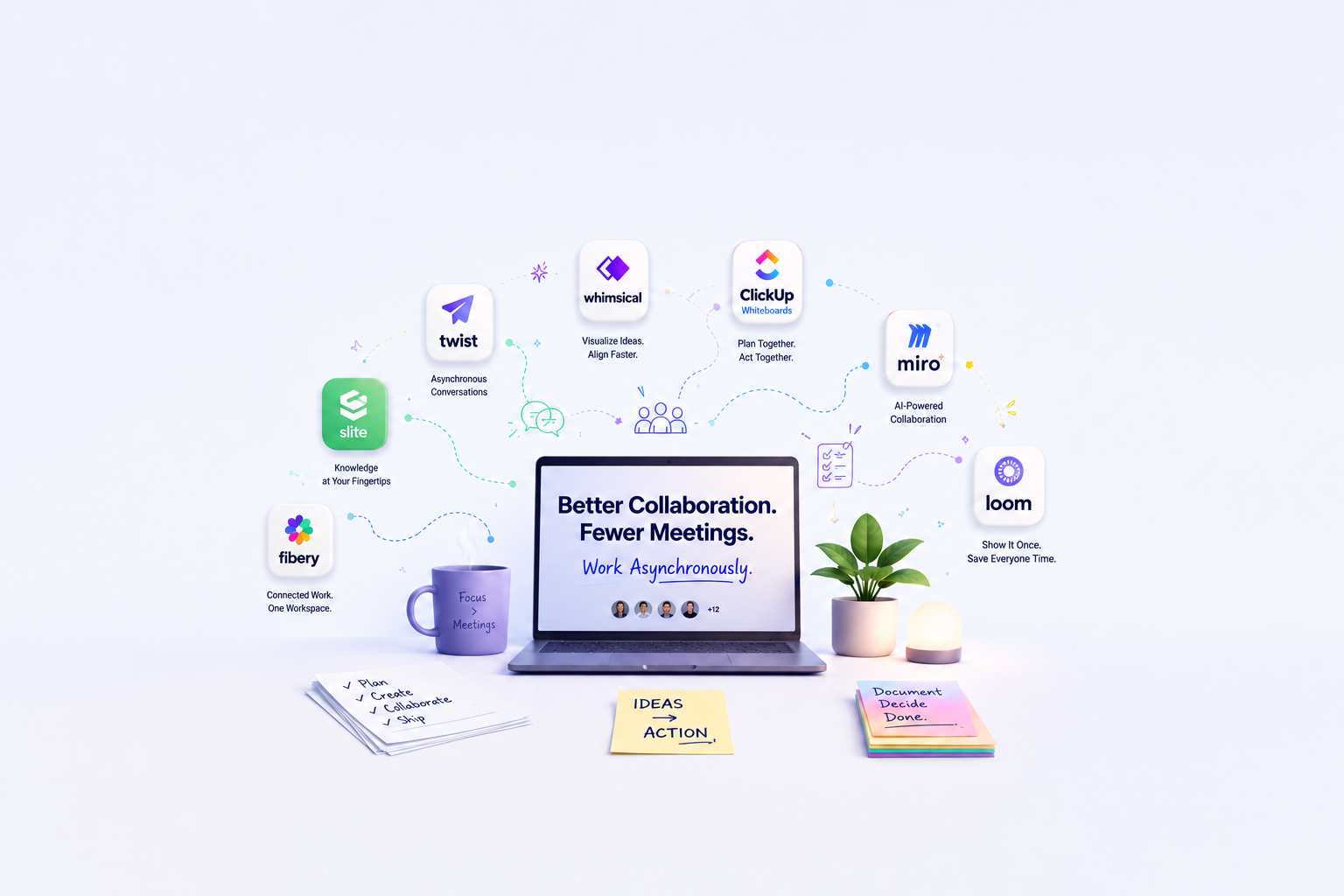
Every company wants better collaboration, but very few want more meetings. Yet calendars continue to overflow with status updates, project reviews, brainstorming sessions, and check-ins that could have been an email—or better yet, a shared workspace. As businesses embrace hybrid and remote work, the focus is shifting from how often teams meet to how effectively they communicate.
The smartest organizations have realized that productivity doesn’t come from filling schedules with video calls. It comes from giving employees the right tools to share ideas, document decisions, track progress, and collaborate asynchronously. Instead of waiting for the next meeting, team members can access information whenever they need it, make informed decisions, and keep projects moving without unnecessary interruptions.
While platforms like Slack, Microsoft Teams, and Zoom dominate the conversation, there are several underrated collaboration tools quietly helping businesses reduce meeting fatigue and improve productivity. These platforms don’t replace human interaction—they make every conversation more meaningful.
1. Twist – Built for Deep Work, Not Constant Notifications
Twist is a messaging platform designed around asynchronous communication. Instead of endless chat channels that constantly demand attention, every discussion is organized into threads, making conversations easier to follow and revisit.
Teams can participate when they’re available rather than feeling pressured to respond instantly. This reduces interruptions, creates more focused workdays, and eliminates many of the quick “Can we jump on a call?” requests that slow everyone down.
2. Fibery – Where Projects, Knowledge, and Collaboration Meet
Fibery combines project management, documentation, databases, and team collaboration into one connected workspace. Instead of switching between multiple applications, everything from customer feedback to product roadmaps lives in a single ecosystem.
Because information is interconnected, everyone has visibility into project progress. Managers spend less time asking for updates, and employees spend less time preparing for status meetings.
3. Slite – The Knowledge Hub Every Team Needs
Many meetings happen simply because people can’t find information. Slite solves this by acting as a collaborative company knowledge base where teams can store meeting notes, onboarding documents, policies, SOPs, and project documentation.
Instead of repeating the same explanations every week, employees can search verified information in seconds. New hires become productive faster, while experienced team members spend more time working and less time answering repetitive questions.
4. Whimsical – Visual Collaboration Without the Whiteboard
Ideas are often easier to understand visually than verbally. Whimsical allows teams to build flowcharts, wireframes, mind maps, user journeys, and process diagrams together in real time.
Rather than spending an hour explaining a concept during a meeting, teams can collaborate visually from anywhere. Designers, developers, marketers, and stakeholders can contribute simultaneously, making brainstorming sessions far more efficient.
5. ClickUp Whiteboards – From Brainstorm to Action Instantly
Most brainstorming sessions end with screenshots, sticky notes, or handwritten lists that eventually get forgotten. ClickUp Whiteboards solve this problem by allowing teams to convert ideas directly into tasks without leaving the workspace.
Projects move seamlessly from planning to execution, eliminating the need for follow-up meetings just to assign responsibilities or organize action items.
6. Miro AI – Smarter Brainstorming with Artificial Intelligence
Miro has become a favorite digital whiteboard, but its AI capabilities remain surprisingly underused. Teams can automatically summarize brainstorming sessions, organize ideas into categories, generate meeting recaps, and identify action items within minutes.
Instead of scheduling another meeting to review notes, everyone receives structured insights immediately, keeping momentum high while reducing administrative work.
7. Loom – Replace Meetings with Clear Video Updates
Sometimes explaining something visually is far more effective than writing a long message. Loom allows employees to record short videos, walk through presentations, review designs, explain dashboards, or provide feedback without scheduling a live meeting.
Recipients can watch the video whenever convenient, leave comments, and continue the discussion asynchronously. What once required a thirty-minute calendar slot often becomes a five-minute recording that everyone can revisit later.
The rise of these collaboration platforms reflects a broader change in how businesses operate. Organizations are beginning to understand that collaboration isn’t measured by the number of meetings held each week. Instead, it’s measured by how quickly teams can access information, make decisions, and execute ideas without unnecessary delays.
Artificial intelligence is accelerating this transformation even further. Today’s collaboration platforms can summarize conversations, generate documentation, organize ideas, identify action items, and answer employee questions automatically. As these capabilities continue to evolve, teams will spend even less time managing communication and more time delivering meaningful work.
Companies adopting asynchronous collaboration also report benefits beyond productivity. Employees enjoy longer periods of uninterrupted focus, remote teams collaborate more effectively across time zones, onboarding becomes faster, and decision-making becomes far more transparent because discussions are documented instead of disappearing once a meeting ends.
Meetings will always have an important place in business. Strategy discussions, relationship building, creative workshops, and complex problem-solving still benefit from real-time interaction. However, routine updates, simple questions, project tracking, and information sharing no longer require everyone to stop what they’re doing and join another video call.
The future of collaboration isn’t about eliminating meetings altogether. It’s about making every meeting count. By adopting the right collaboration tools, organizations can create a workplace where communication happens naturally, knowledge is always accessible, and productivity is driven by action rather than endless discussions.
The best collaboration software doesn’t just help teams work together. It quietly gives them something even more valuable—the freedom to spend less time talking about work and more time accomplishing it.