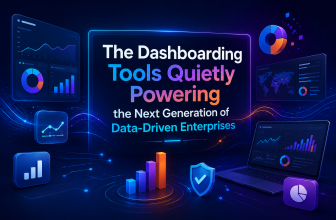
Business intelligence is no longer reserved for data analysts. Across industries, dashboards have become central to decision-making, helping leaders monitor operations, customer behavior, financial performance, and team productivity in real time. At the same time, artificial intelligence is changing how organizations interact with data. Instead of building reports manually, business users increasingly expect to ask questions in natural language, receive instant insights, and make decisions faster.
This shift comes as enterprises continue investing in modern data platforms, embedded analytics, and AI-powered reporting. Organizations are also moving toward governed metrics and cloud-native analytics that make data more accessible without sacrificing accuracy.
While platforms like Power BI and Tableau dominate conversations, several lesser-known dashboarding solutions are quietly gaining momentum by solving challenges that modern businesses face today. For B2B decision makers evaluating analytics platforms, these tools deserve closer attention.
Metabase
One reason Metabase has steadily grown in popularity is its simplicity. As organizations work to democratize data, they need analytics platforms that business teams can use without requiring advanced technical expertise.
Metabase focuses on reducing the complexity of dashboard creation while still offering powerful capabilities for technical users. Teams can explore data using visual query builders or SQL, making the platform suitable for both business stakeholders and analysts.
Its growing support for embedded analytics has also made it attractive for SaaS providers looking to deliver customer-facing dashboards within their own products. As companies increasingly invest in AI-assisted reporting and self-service analytics, platforms like Metabase fit naturally into modern business intelligence strategies by making insights available across the organization rather than limiting them to dedicated analytics teams.
Lightdash
The rapid adoption of cloud data warehouses and dbt has transformed how organizations manage data. Instead of relying on disconnected reports, businesses are building centralized, trusted metrics that everyone can understand.
Lightdash was designed with this modern data stack in mind. Rather than treating dashboards as isolated reporting tools, it connects directly to data models maintained by analytics engineers, ensuring business users always work from consistent definitions.
This approach aligns with one of the biggest trends shaping business intelligence today: governed self-service analytics. Decision makers want teams to explore data independently while maintaining confidence that every department is measuring performance using the same logic.
As AI-generated reporting becomes more common, trusted data foundations are becoming even more valuable. Lightdash helps organizations establish that consistency before AI begins interpreting business metrics.
Apache Superset
Open-source software continues gaining traction across enterprise technology, and dashboarding is no exception. Many organizations are looking beyond commercial licensing models toward platforms that offer greater flexibility and customization.
Apache Superset has emerged as one of the strongest open-source business intelligence platforms available today. Backed by an active development community, it provides advanced visualization capabilities while supporting large-scale enterprise deployments.
Its flexibility makes it particularly attractive for organizations with unique reporting requirements or complex data environments. Rather than adapting business processes to fit a commercial analytics platform, enterprises can customize Superset to meet their specific operational needs.
As businesses continue optimizing technology spending while expanding AI initiatives, open-source analytics platforms are becoming an increasingly strategic choice. Apache Superset demonstrates that organizations no longer have to sacrifice sophisticated dashboard capabilities when pursuing cost-effective solutions.
Holistics
Modern organizations increasingly recognize that dashboards are only as valuable as the quality of the metrics behind them. As companies manage growing volumes of operational, financial, and customer data, consistency becomes just as important as visualization.
Holistics focuses on creating governed analytics by allowing organizations to define reusable business metrics before dashboards are built. This helps reduce conflicting reports across departments while improving confidence in executive decision-making.
Another trend accelerating Holistics’ relevance is the growing importance of semantic layers. As AI-powered business intelligence expands, organizations need structured, well-defined data models that allow both people and AI systems to interpret information consistently.
For B2B organizations managing multiple teams, products, and business units, this approach reduces reporting confusion while creating a stronger foundation for scalable analytics.
Business intelligence is entering a new phase where dashboards are becoming more intelligent, collaborative, and integrated into everyday business workflows. AI is making analytics more conversational, cloud platforms are making insights more accessible, and organizations are demanding greater trust in the data driving their decisions.
That evolution means choosing a dashboarding platform is no longer just about attractive visualizations. It is about selecting technology that supports scalable governance, AI readiness, embedded analytics, and faster decision-making across the enterprise.
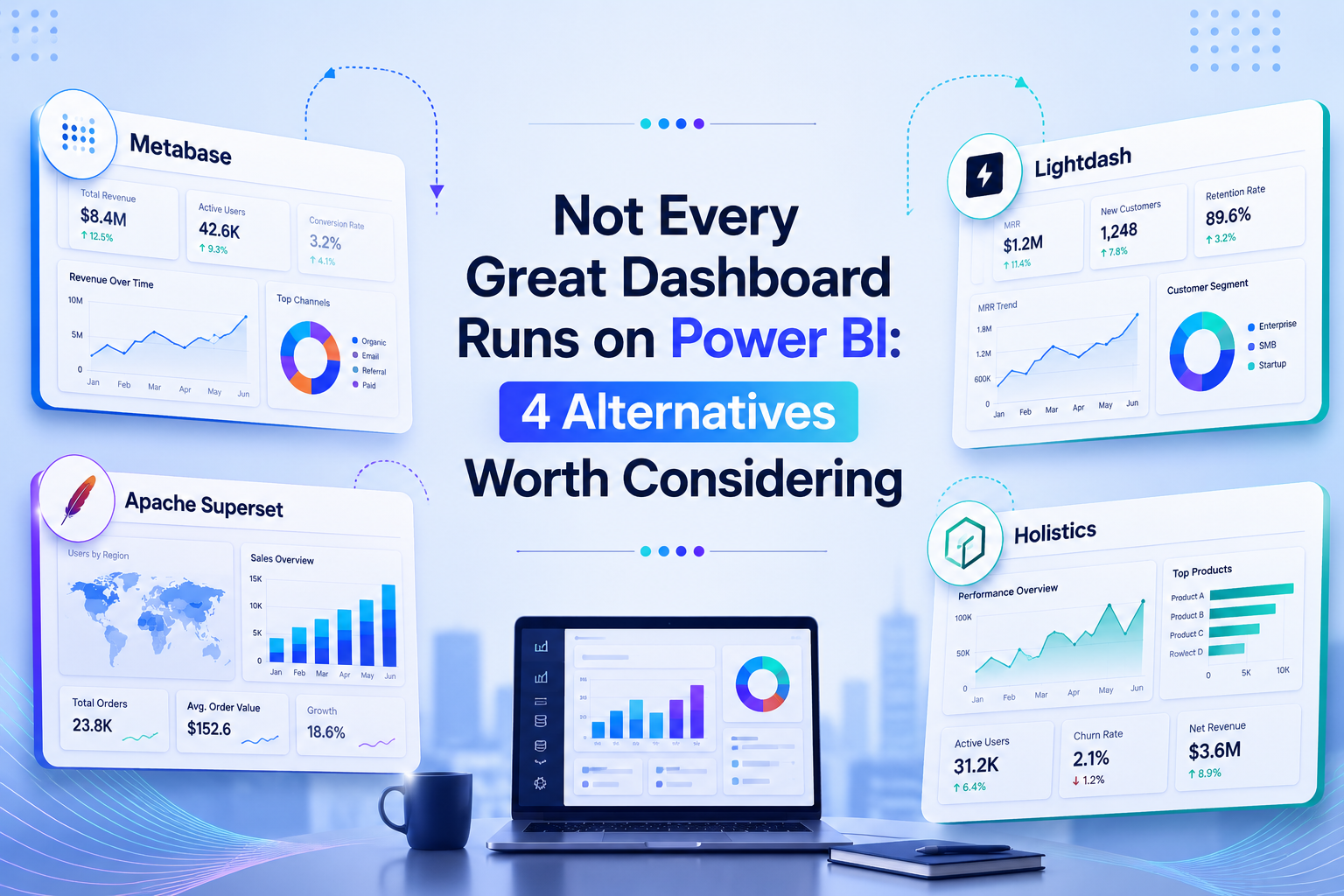
While established platforms will continue leading the market, tools like Metabase, Lightdash, Apache Superset, and Holistics demonstrate that innovation is happening well beyond the biggest names. For organizations building modern analytics capabilities, these emerging platforms offer fresh approaches that align closely with where business intelligence is headed next.