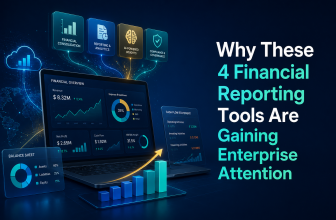
Financial reporting has evolved far beyond producing quarterly statements and month-end reports. Today’s finance teams are expected to deliver real-time insights, support strategic planning, manage regulatory compliance, and help leadership make faster, data-driven decisions. With finance increasingly playing a strategic role in business growth, organizations are looking for technologies that go beyond visualization and offer deeper planning, forecasting, and reporting capabilities.
While platforms like Power BI, Tableau, and Looker continue to dominate conversations around business intelligence, they aren’t always built specifically for finance professionals. Financial reporting requires more than dashboards – it demands accurate consolidation, seamless planning, compliance support, and the ability to transform complex financial data into actionable business insights.
Fortunately, several specialized financial reporting tools are quietly gaining recognition among CFOs and finance teams. They may not receive the same level of attention as mainstream analytics platforms, but they excel at solving the day-to-day challenges that finance professionals face.
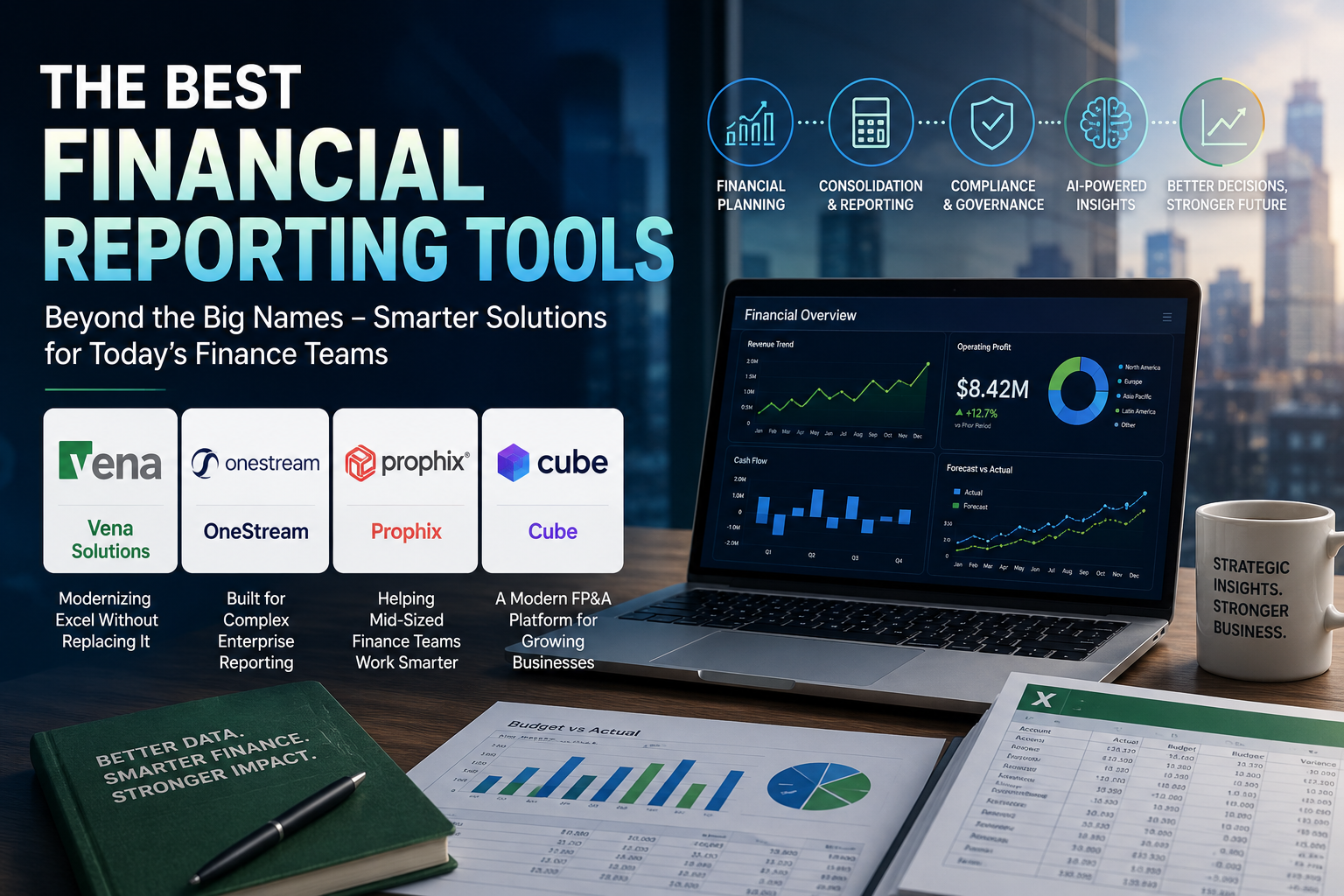
Vena Solutions: Modernizing Excel Without Replacing It
For many finance departments, Excel remains the backbone of financial reporting. The challenge isn’t using spreadsheets; it’s managing collaboration, maintaining version control, and ensuring data consistency across multiple teams.
Vena Solutions addresses these challenges by combining the familiarity of Excel with enterprise-grade financial planning and reporting capabilities. Instead of forcing organizations to abandon existing workflows, it enhances them through centralized data management, workflow automation, and cloud collaboration.
Its deep integration with Microsoft 365 makes it particularly attractive for enterprises already operating within the Microsoft ecosystem. Recent AI-powered capabilities also help finance teams improve forecasting accuracy and automate repetitive reporting tasks, allowing professionals to spend more time analyzing financial performance rather than preparing reports.
OneStream: Built for Complex Enterprise Reporting
As organizations expand across regions and business units, financial consolidation becomes increasingly challenging. Multiple entities, currencies, and regulatory requirements often create reporting complexity that traditional tools struggle to manage efficiently.
OneStream was designed to solve these enterprise-level challenges through a unified platform that combines financial consolidation, planning, reporting, and analytics. Instead of relying on disconnected applications, finance teams can manage critical reporting processes from a single environment.
The platform has also expanded its capabilities to support ESG reporting and advanced scenario planning, reflecting the growing demand for sustainability reporting and forward-looking financial analysis. As CFOs move beyond historical reporting toward strategic decision-making, OneStream provides the scalability required for large and rapidly growing enterprises.
Prophix: Helping Mid-Sized Finance Teams Work Smarter
Not every business needs enterprise-scale financial software. Many mid-sized organizations require solutions that deliver advanced capabilities without introducing unnecessary complexity or lengthy implementation projects.
Prophix has become a preferred choice for companies seeking to automate budgeting, forecasting, and financial reporting while maintaining ease of use. Its intuitive interface enables finance professionals to generate reports, monitor KPIs, and perform variance analysis more efficiently than spreadsheet-driven processes.
Automation plays a significant role in its appeal. Routine reporting workflows can be scheduled and standardized, reducing manual effort while improving consistency. The platform also supports scenario planning, enabling finance leaders to evaluate different business outcomes before making strategic financial decisions.
Cube: A Modern FP&A Platform for Growing Businesses
Cube has emerged as one of the most promising financial reporting platforms for businesses looking to modernize planning without abandoning familiar spreadsheet workflows. Built with finance teams in mind, Cube integrates with both Excel and Google Sheets while connecting seamlessly with leading ERP and accounting systems.
Its strength lies in enabling real-time budgeting, forecasting, scenario modelling, and management reporting without requiring users to learn entirely new software. By combining spreadsheet flexibility with centralized financial data, Cube helps organizations improve collaboration while reducing manual reconciliation.
For growing businesses that want cloud-based reporting with minimal disruption to existing processes, Cube offers a practical balance between familiarity and innovation.
Choosing the Right Financial Reporting Tool
The best financial reporting tools aren’t necessarily the ones with the most features—they’re the ones that align with an organization’s operational needs, reporting complexity, and long-term growth strategy.
Enterprises managing global operations may prioritize consolidation and governance capabilities, while mid-sized businesses may value ease of implementation and workflow automation. Organizations already invested in Microsoft technologies might benefit from Excel-centric platforms, whereas businesses undergoing digital transformation may look for cloud-native solutions with AI-powered forecasting and predictive analytics.
As artificial intelligence continues to reshape finance, reporting platforms are evolving beyond static reports. Intelligent forecasting, anomaly detection, automated narrative reporting, and scenario modelling are becoming standard capabilities that help finance teams shift from reporting historical performance to guiding future business decisions.
The Future of Financial Reporting Is Smarter, Not Just Faster
Finance leaders are no longer measured solely by how quickly they close the books or produce reports. Increasingly, they are expected to provide strategic insights that help businesses respond to market changes with confidence.
While mainstream analytics platforms continue to play an important role, specialized financial reporting tools like Vena Solutions, OneStream, Prophix, and Cube demonstrate that some of the most meaningful innovation is happening outside the industry’s biggest names. These platforms are helping finance teams automate repetitive work, strengthen governance, improve forecasting, and deliver more actionable insights to business leaders.
As finance becomes increasingly data-driven and AI-powered, organizations that invest in purpose-built reporting solutions will be better positioned to make faster, smarter, and more informed decisions. Sometimes, the best technology investments aren’t the most popular ones—they’re the ones designed specifically for the challenges finance teams solve every day.