Forget Photoshop? These AI Design Tools Are Closing the Gap
 Vansh Banthia
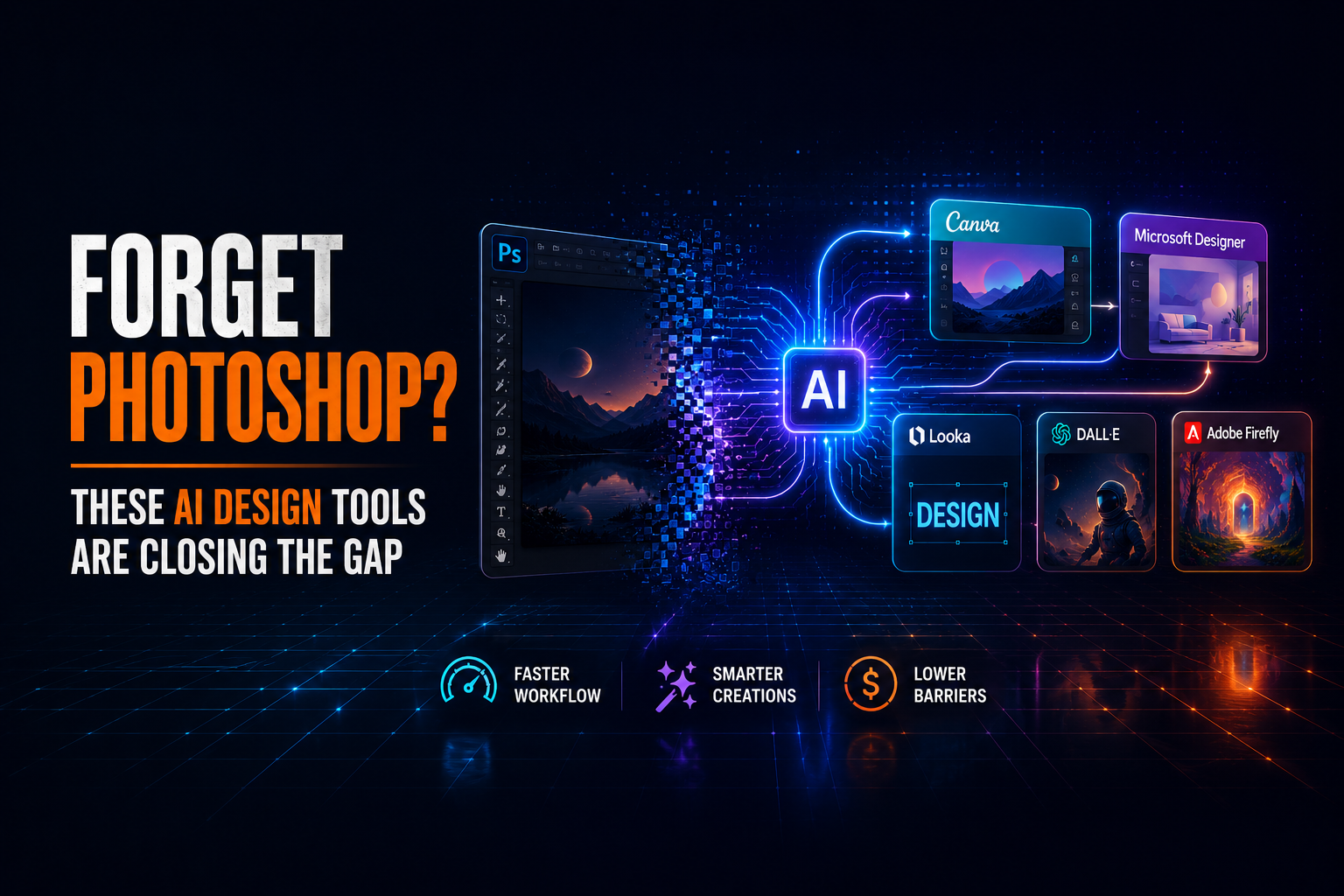
For decades, Photoshop has been the gold standard for digital design. From professional photographers to graphic designers, it has powered everything from magazine covers to social media campaigns. But something remarkable has happened over the last two years. Artificial intelligence has transformed the creative landscape, making high-quality design faster, simpler, and far more accessible. Today, you no longer need years of editing experience to create eye-catching visuals. With the right AI-powered platforms, anyone can generate stunning graphics, edit images, remove backgrounds, create illustrations, or even design complete marketing campaigns in minutes.
While tools like Canva AI and Adobe Firefly dominate the conversation, they’re far from the only innovators in this space. A new generation of AI design platforms is quietly pushing creative boundaries, offering features that rival premium software without demanding a steep learning curve. Whether you’re a content creator, marketer, entrepreneur, or designer looking to speed up your workflow, these underrated tools deserve a closer look.
Here are seven AI design tools that are proving Photoshop isn’t the only path to professional-quality creativity.
1. Krea AI
Krea AI has rapidly become a favorite among digital artists for one simple reason—it generates and refines visuals in real time. Instead of waiting for multiple image generations, users can modify prompts and instantly watch their artwork evolve. This interactive approach makes brainstorming significantly faster and more intuitive.
Beyond image generation, Krea AI includes powerful upscaling features that transform low-resolution graphics into crisp, detailed visuals suitable for presentations, websites, and social media. For creators who value experimentation, Krea AI feels less like software and more like a creative partner.
2. Dzine AI
Formerly known as Stylar AI, Dzine AI combines professional design controls with AI automation. It allows users to generate illustrations, edit product photos, redesign backgrounds, and create marketing assets without switching between multiple applications.
One standout feature is its layered editing system, giving creators greater flexibility than many AI image generators. Rather than producing a single finished image, Dzine AI lets users continue refining elements much like traditional editing software.
3. Ideogram
Most AI image generators struggle with typography. Ideogram solves that challenge exceptionally well. It creates visually compelling graphics while accurately rendering readable text within images, making it ideal for posters, advertisements, social media graphics, and presentation covers.
Designers creating promotional materials can generate polished visuals with integrated headlines, eliminating hours of manual adjustments typically required in traditional software.
4. Magnific AI
Creating AI-generated artwork is one thing; making it production-ready is another. Magnific AI specializes in enhancing existing images through intelligent upscaling and detail reconstruction.
Instead of simply enlarging images, the platform intelligently adds textures, lighting, and realistic details, making artwork suitable for print, digital campaigns, and professional portfolios. It’s particularly valuable for designers restoring old images or improving AI-generated artwork before publishing.
5. Recraft
Vector graphics remain essential for logos, branding, icons, and marketing materials. Recraft approaches this challenge differently by allowing users to generate editable vector illustrations directly through AI.
Unlike standard image generators that produce raster graphics, Recraft creates scalable assets suitable for professional branding projects. Businesses looking to produce custom illustrations without hiring an illustrator may find this platform surprisingly capable.
6. Clipdrop
Clipdrop has quietly evolved into one of the most practical AI design utilities available today. Originally known for quick background removal, it now offers object cleanup, image relighting, AI-generated replacements, background generation, and high-quality image enhancement.
Its intuitive interface makes it especially useful for ecommerce businesses, marketers, and social media managers who frequently edit product photos and promotional content. Rather than replacing professional editing software entirely, Clipdrop dramatically reduces the time spent on repetitive editing tasks.
7. Leonardo AI
Although Leonardo AI is gaining recognition, it still remains underutilized compared to mainstream AI platforms. Designed with creators in mind, it excels at concept art, game assets, illustrations, marketing visuals, and product mockups.
One of its strongest advantages is customization. Users can train personal models, maintain visual consistency across projects, and generate multiple creative variations without starting from scratch every time. This flexibility makes Leonardo AI valuable for agencies, startups, and creative professionals working on brand-specific projects.
Why AI Design Tools Are Gaining Momentum
The growing popularity of AI design platforms isn’t about replacing creative professionals. Instead, these tools eliminate repetitive tasks that traditionally consumed hours of manual work. Background removal, object replacement, image enhancement, mockup creation, and concept visualization can now happen within minutes.
This shift allows designers to spend more time developing ideas and less time performing technical edits. Meanwhile, businesses with limited design resources can produce professional-quality visuals without investing heavily in expensive software or extensive training.
As AI continues evolving, these platforms are becoming increasingly collaborative rather than automated, helping users refine creativity instead of replacing it.
Choosing the Right Tool
Each platform serves a slightly different purpose. Krea AI excels in interactive image generation, Dzine AI provides advanced editing flexibility, Ideogram shines with typography, Magnific AI specializes in image enhancement, Recraft focuses on vector creation, Clipdrop simplifies photo editing, and Leonardo AI offers impressive creative control for large-scale projects.
Instead of searching for one perfect replacement for Photoshop, many creators are building AI-powered design workflows by combining several specialized tools. The result is faster production, greater creative freedom, and significantly reduced editing time.
Conclusion
Photoshop remains an industry powerhouse, but it is no longer the only route to professional-quality design. The rise of AI has introduced a new generation of creative tools that prioritize speed, accessibility, and intelligent automation without sacrificing impressive results.
The seven platforms featured here may not dominate headlines like the biggest names in AI, but they’re quietly redefining how creators, marketers, and businesses approach visual content. Whether you’re designing social media graphics, building a brand identity, creating product mockups, or experimenting with digital art, these underrated tools can dramatically expand your creative possibilities.
The future of design isn’t about replacing creativity with artificial intelligence—it’s about giving creativity better tools. And as these platforms continue to evolve, the gap between traditional design software and AI-assisted creation is becoming smaller than ever.