


5 Powerful AI Search Optimization Tools Every Business Needs in 2026

Artificial intelligence has fundamentally changed how people discover information online. Instead of relying solely on traditional search engines, users are increasingly turning to AI-powered platforms like ChatGPT, Google AI Overviews, Perplexity, and Microsoft Copilot for instant, conversational answers. This shift has introduced a new challenge for businesses: ensuring their content is visible not only in search engine rankings but also within AI-generated responses.
That is why AI Search Optimization Tools are becoming an essential part of every modern marketing strategy. These platforms help businesses understand how AI interprets content, identify optimization opportunities, improve technical SEO, and create authoritative content that performs across both traditional and AI-powered search experiences.
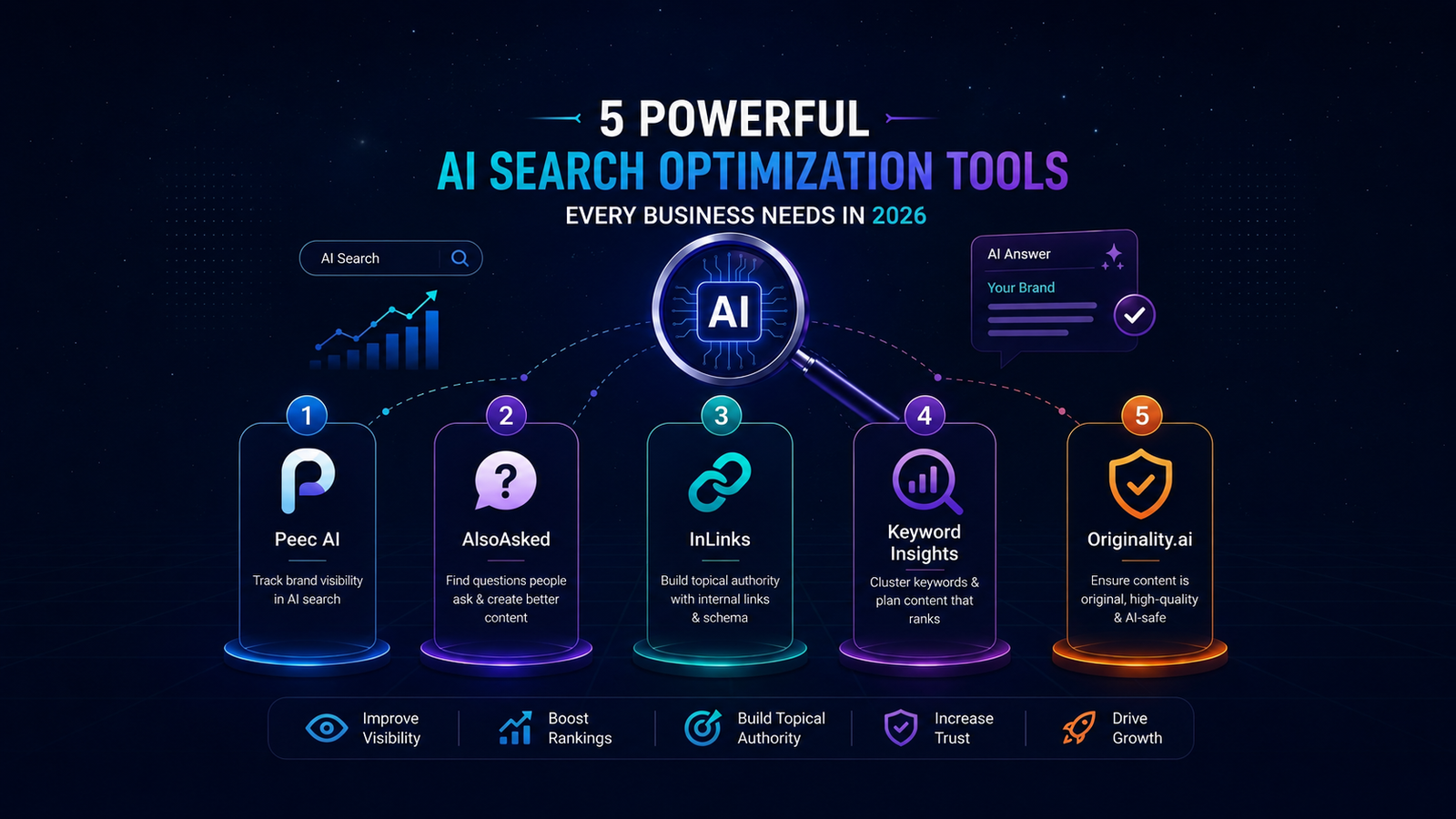
Here are five underrated AI Search Optimization Tools that deserve a place in every business’s toolkit in 2026.
1. Peec AI
Most SEO tools still focus primarily on Google rankings. Peec AI takes a different approach by helping businesses monitor how often their brand appears in AI-generated search results across platforms such as ChatGPT, Perplexity, Claude, and Google AI Overviews.
Instead of tracking only keyword positions, it provides visibility into AI citations, brand mentions, and competitive performance within conversational search. This makes it particularly valuable for businesses that want to understand how AI platforms reference their brand and how they compare against competitors. It is an excellent choice for organizations focused on AI visibility tracking, brand monitoring, and AI search analytics.
2. AlsoAsked
Great content begins with understanding what users are actually asking.
AlsoAsked visualizes Google’s “People Also Ask” data, making it easier to uncover related questions and build content that answers multiple search intents within a single article. Since AI search engines prioritize comprehensive and context-rich answers, the platform helps marketers create content that naturally performs well for both human readers and AI assistants. It is especially useful for building topic clusters, creating FAQ sections, and planning content that aligns with user intent.
3. InLinks
Many businesses focus heavily on backlinks while overlooking the importance of internal linking.
InLinks uses artificial intelligence to analyze website topics, recommend semantic internal links, and strengthen topical authority across an entire website. The platform also automates schema markup, making websites easier for both search engines and AI systems to understand. As AI-powered search increasingly rewards contextual relevance and well-structured content, semantic optimization has become more valuable than ever. InLinks is ideal for businesses looking to improve internal linking, automate schema implementation, and build stronger entity-based SEO.
4. Keyword Insights
Traditional keyword research often produces long spreadsheets that are difficult to organize and even harder to turn into a meaningful content strategy.
Keyword Insights simplifies this process by automatically grouping keywords based on search intent and recommending content clusters that strengthen topical authority. Rather than publishing dozens of isolated articles, businesses can create comprehensive content that answers multiple related questions. This aligns perfectly with the way AI search engines evaluate and surface authoritative content. The platform is particularly effective for keyword clustering, search intent analysis, and long-term content planning.
5. Originality.ai
With AI-generated content becoming increasingly common, maintaining originality and content quality is more important than ever.
Originality.ai helps businesses evaluate the quality of their content by detecting duplication, improving readability, and ensuring articles meet modern publishing standards. Rather than discouraging AI-assisted writing, it encourages businesses to combine AI efficiency with human expertise to produce trustworthy, high-quality content. It is an invaluable tool for editorial workflows, content quality assurance, and maintaining publishing credibility.
Why These AI Search Optimization Tools Matter
Search is no longer limited to Google’s traditional blue links. Businesses now need content that performs across AI assistants, conversational search engines, and traditional search results simultaneously.
The best AI Search Optimization Tools help marketers understand their visibility within AI search, build stronger topical authority, improve internal linking, optimize structured content, and consistently create higher-quality articles. More importantly, they help businesses adapt to changing search behaviour without constantly chasing algorithm updates. Instead, organizations can focus on publishing valuable, authoritative content that genuinely answers users’ questions while building long-term trust with both readers and AI systems.
Looking Ahead
AI-powered search will continue evolving throughout 2026, making online visibility more competitive than ever before.
Businesses that invest in the right AI Search Optimization Tools today will be better prepared for tomorrow’s search landscape. Whether the objective is improving technical SEO, building comprehensive topic clusters, or monitoring AI citations, the goal remains the same: creating content that both people and AI platforms recognize as authoritative, accurate, and valuable.
Technology will continue to reshape the future of search, but businesses that combine the right optimization tools with a thoughtful, user-first content strategy will be best positioned to increase visibility, establish credibility, and achieve sustainable organic growth in the AI era.


