For years, SEO followed a familiar formula. Find the right keywords, optimize your pages, build quality backlinks, and aim for the top spot on Google. While those fundamentals still matter, the way people search for information is changing faster than ever.
Today, users aren’t just typing queries into search engines—they’re asking AI-powered assistants for complete answers. Platforms like ChatGPT, Google’s AI Overviews, Perplexity, and Microsoft’s Copilot are reshaping how people discover content, compare products, and make decisions.
For businesses and marketers, this raises an important question: If search is changing, should your SEO toolkit change too?
The short answer is yes—but not in the way many people expect.
Search Has Evolved Beyond Ten Blue Links
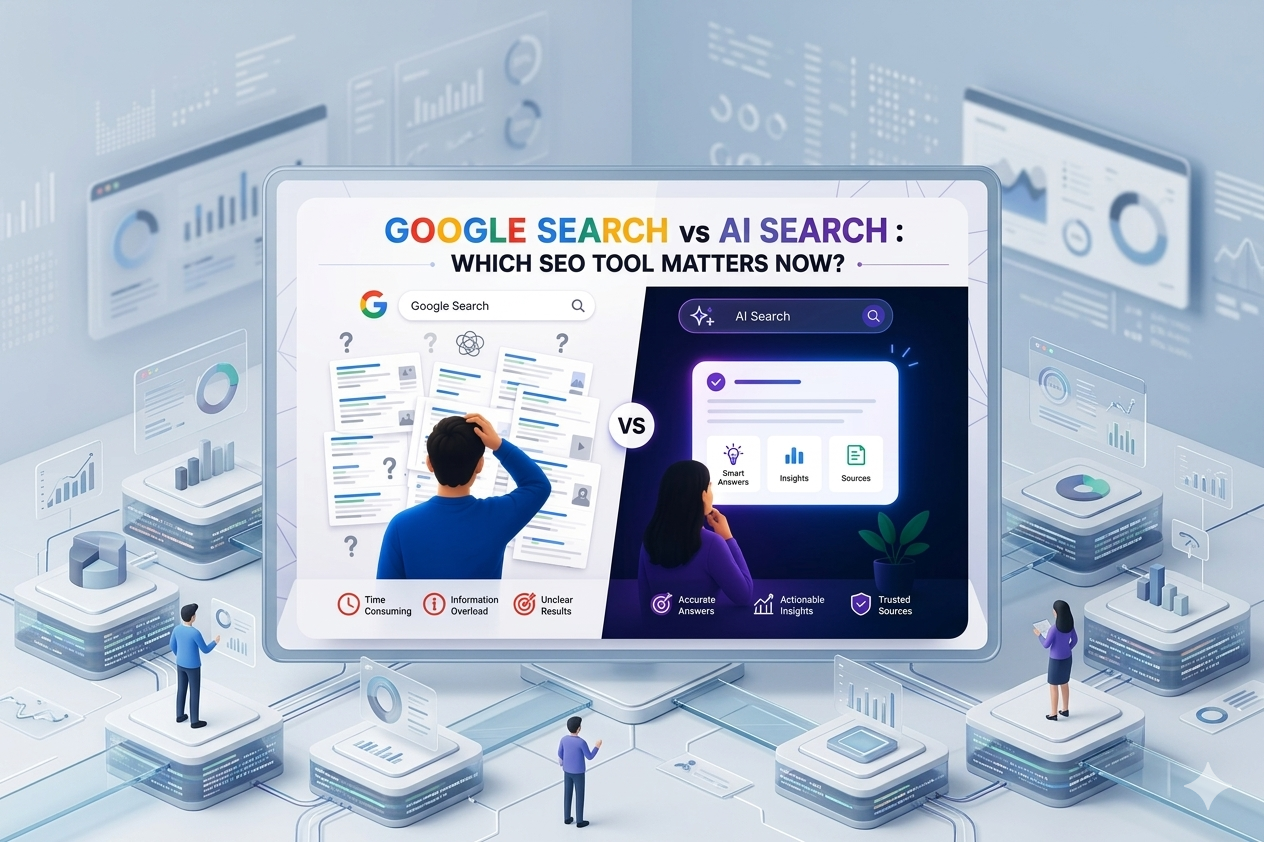
Traditional search engines are built to rank web pages. AI-powered search platforms are designed to understand intent, summarize information, and provide direct answers.
Instead of showing a list of websites, AI search often delivers a conversational response supported by multiple sources. This means users may find what they need without clicking through several search results.
That doesn’t mean traditional SEO is disappearing. It means optimization now extends beyond ranking pages—it also involves becoming a trusted source that AI systems choose to reference.
Businesses that adapt to this shift will be better positioned to maintain visibility as search behavior continues to evolve.
Traditional SEO Tools Still Play an Important Role
Keyword research, technical audits, backlink analysis, and site performance remain the foundation of a strong SEO strategy.
Tools that help businesses identify search demand, improve website performance, and monitor rankings continue to provide valuable insights.
Marketers should still prioritize:
- Keyword research
- Technical SEO audits
- Website performance monitoring
- Competitor analysis
- Backlink evaluation
- Content optimization
These activities ensure websites remain accessible, crawlable, and valuable to both users and search engines.
The difference is that these tools are no longer the entire strategy—they’re only part of it.
AI Search Demands Smarter Content
AI search engines prioritize content that clearly answers questions, demonstrates expertise, and provides genuine value.
Instead of creating pages that simply repeat target keywords, businesses need content that is structured, comprehensive, and easy for both people and AI systems to understand.
This makes content optimization more important than ever.
Articles that include clear headings, concise explanations, original insights, and well-organized information are more likely to become trusted reference sources.
In other words, businesses should optimize for understanding—not just rankings.
The SEO Tools That Matter Most Today
Modern SEO requires a combination of traditional optimization platforms and AI-powered content solutions.
Businesses should consider tools that support:
- Technical website analysis
- Content optimization
- AI-assisted writing
- Search intent research
- Structured data implementation
- Performance monitoring
- User behavior analytics
Rather than replacing traditional SEO software, AI tools complement existing workflows by helping marketers create higher-quality content more efficiently.
The strongest strategies combine human expertise with intelligent automation.
User Experience Is Becoming an SEO Signal
Search engines and AI platforms share one common goal: delivering the best possible experience for users.
That means websites that load quickly, provide accurate information, and offer intuitive navigation are more likely to perform well over time.
Technical performance remains essential.
Businesses should regularly monitor:
- Core Web Vitals
- Mobile responsiveness
- Page speed
- Internal linking
- Website accessibility
- Secure browsing
Improving user experience benefits both traditional rankings and AI-driven content discovery.
Authority Matters More Than Ever
As AI-generated content becomes increasingly common, trust is becoming a competitive advantage.
Search platforms are placing greater emphasis on expertise, credibility, and reliable information.
Businesses that consistently publish original research, industry insights, case studies, and expert commentary are more likely to earn visibility across both traditional search engines and AI-powered platforms.
Quality now outweighs quantity.
Instead of publishing dozens of average articles, organizations benefit more from creating authoritative resources that answer important questions thoroughly.
Preparing Your SEO Strategy for the Future
The future of SEO isn’t about choosing between Google Search and AI Search—it is about optimizing for both.
Forward-thinking marketers are expanding their strategies by combining technical SEO with content that answers real user questions and demonstrates genuine expertise.
They’re also investing in analytics tools that measure user engagement instead of focusing only on rankings.
As AI continues to influence how people discover information, businesses that adapt early will have a stronger competitive advantage.
SEO is no longer just about helping search engines understand your website.
It’s about helping intelligent systems recognize your content as reliable, relevant, and worth recommending.
Final Thoughts
Google Search remains one of the most important channels for online visibility, but AI-powered search is changing how users interact with information. The businesses that succeed in this new environment won’t abandon traditional SEO—they’ll build on it.
The most valuable SEO tools today are those that combine technical optimization, content intelligence, performance monitoring, and AI-assisted workflows into a unified strategy. Together, they help businesses create websites that are easy to discover, valuable to readers, and trustworthy enough to be referenced by both search engines and AI platforms.
As search continues to evolve, one principle remains unchanged: the best-performing content is the content that genuinely helps people. Whether someone finds your website through Google, an AI assistant, or the next generation of search technology, creating accurate, useful, and well-structured content will always be your strongest SEO strategy.