For years, enterprise SEO was largely about ranking for keywords, building backlinks, and optimizing technical performance. While those fundamentals remain essential, the rules of search are evolving. Today, brands aren’t just competing for Google’s first page—they’re competing to become trusted sources for AI-powered search experiences like ChatGPT, Google’s AI Overviews, Perplexity, and Gemini.
This shift has introduced new priorities. Search engines are placing greater emphasis on entity relationships, structured data, crawl efficiency, and website health, while AI assistants increasingly favor authoritative, well-organized content they can confidently reference.
Most SEO teams already rely on platforms like Ahrefs, Semrush, and Screaming Frog. They’re excellent tools, but they don’t cover every challenge modern SEO professionals face. Fortunately, a handful of lesser-known tools are helping forward-thinking teams prepare for what’s next.
Here are five underrated SEO tools that deserve a place on every enterprise marketer’s radar.
- ContentKing: Real-Time SEO Monitoring That Never Sleeps
Technical SEO issues rarely happen during scheduled audits. A developer accidentally adds a noindex tag, an important redirect breaks after a deployment, or a robots.txt file gets modified without anyone noticing. By the time the next crawl runs, rankings may have already been affected.
ContentKing takes a completely different approach by monitoring your website continuously rather than periodically. Instead of discovering problems days later, it alerts your team the moment critical SEO elements change.
For enterprise websites with thousands of pages and frequent content updates, this real-time visibility can prevent minor technical mistakes from becoming major traffic losses.
ContentKing is particularly useful for monitoring broken pages, canonical changes, redirect issues, internal linking problems, robots.txt updates, and indexability. Rather than replacing your existing crawler, it acts as an always-on monitoring layer that keeps watch between scheduled audits.
As websites become increasingly dynamic, continuous monitoring is quickly becoming a necessity rather than a luxury.
- InLinks: Building SEO Around Entities Instead of Keywords
Search engines have become remarkably good at understanding context. Instead of matching exact keywords, they’re building relationships between brands, products, people, industries, and concepts.
This is where InLinks stands apart.
The platform focuses on entity SEO—a growing discipline that helps search engines understand what your content is actually about. It analyzes pages, recommends entity-based internal links, generates schema markup, and organizes content into topical clusters that strengthen semantic relevance.
Rather than asking which keyword a page should rank for, InLinks helps answer a much more valuable question: what should search engines understand about this page?
That distinction matters even more as AI-generated search results rely heavily on knowledge graphs and contextual relationships instead of traditional keyword matching.
For brands investing in topical authority and long-term organic growth, entity optimization is becoming an increasingly important competitive advantage.
- IndexNow: Helping Search Engines Discover Content Faster
One of the most overlooked challenges in enterprise SEO isn’t creating content—it’s getting search engines to discover updates quickly.
Large ecommerce websites, publishers, SaaS documentation portals, and enterprise blogs often publish hundreds or even thousands of pages each month. Waiting for search engines to revisit those pages naturally can delay indexing and slow down visibility.
IndexNow addresses that problem with a simple concept. Whenever a page is published, updated, redirected, or removed, your website instantly notifies participating search engines instead of waiting for them to crawl your site again.
While IndexNow is widely associated with Microsoft Bing, adoption across the search ecosystem continues to grow, making it a valuable addition to modern technical SEO workflows.
For websites that update content frequently, faster discovery means fresher search results, improved crawl efficiency, and fewer delays between publishing and indexing.
It’s one of those improvements users never notice—but search engines certainly do.
- Profound: Measuring Visibility in the Age of AI Search
SEO reporting has traditionally focused on rankings, impressions, and clicks. But AI-powered search has introduced a new question:
Is your brand actually appearing in AI-generated answers?
Profound is one of the first platforms built specifically to answer that question.
Rather than measuring keyword positions alone, it tracks how brands appear across AI search experiences, monitoring citations, mentions, share of voice, and competitive visibility within AI-generated responses.
As more users ask ChatGPT, Gemini, or Perplexity for software recommendations, vendor comparisons, and buying advice, understanding your AI visibility is becoming just as valuable as monitoring your Google rankings.
Although AI visibility is still an emerging metric, early adopters are already treating it as an extension of traditional SEO rather than a separate discipline.
For enterprise marketing teams, Profound offers an early glimpse into how discoverability is evolving beyond conventional search engines.
- JetOctopus: Technical SEO at Enterprise Scale
Many SEO crawlers perform well on small and medium-sized websites, but enterprise websites often present an entirely different challenge. Millions of URLs, complex site architectures, JavaScript-heavy pages, and massive log files require tools built specifically for scale.
JetOctopus is designed with exactly that in mind.
The platform combines cloud-based website crawling with server log analysis, helping SEO teams understand not only how their websites are structured but also how search engine bots actually interact with them.
By analyzing crawl behavior alongside technical performance, JetOctopus uncovers opportunities to improve crawl budget, identify orphan pages, detect inefficient internal linking, and resolve indexing bottlenecks that might otherwise go unnoticed.
For organizations managing large websites, these insights can have a significant impact on overall search performance without publishing a single new page.
Why These Tools Matter Now
The future of SEO isn’t about abandoning traditional optimization—it’s about expanding it.
Search engines are becoming more intelligent, AI assistants are becoming trusted research companions, and technical excellence is playing a larger role in determining which brands get surfaced and cited.
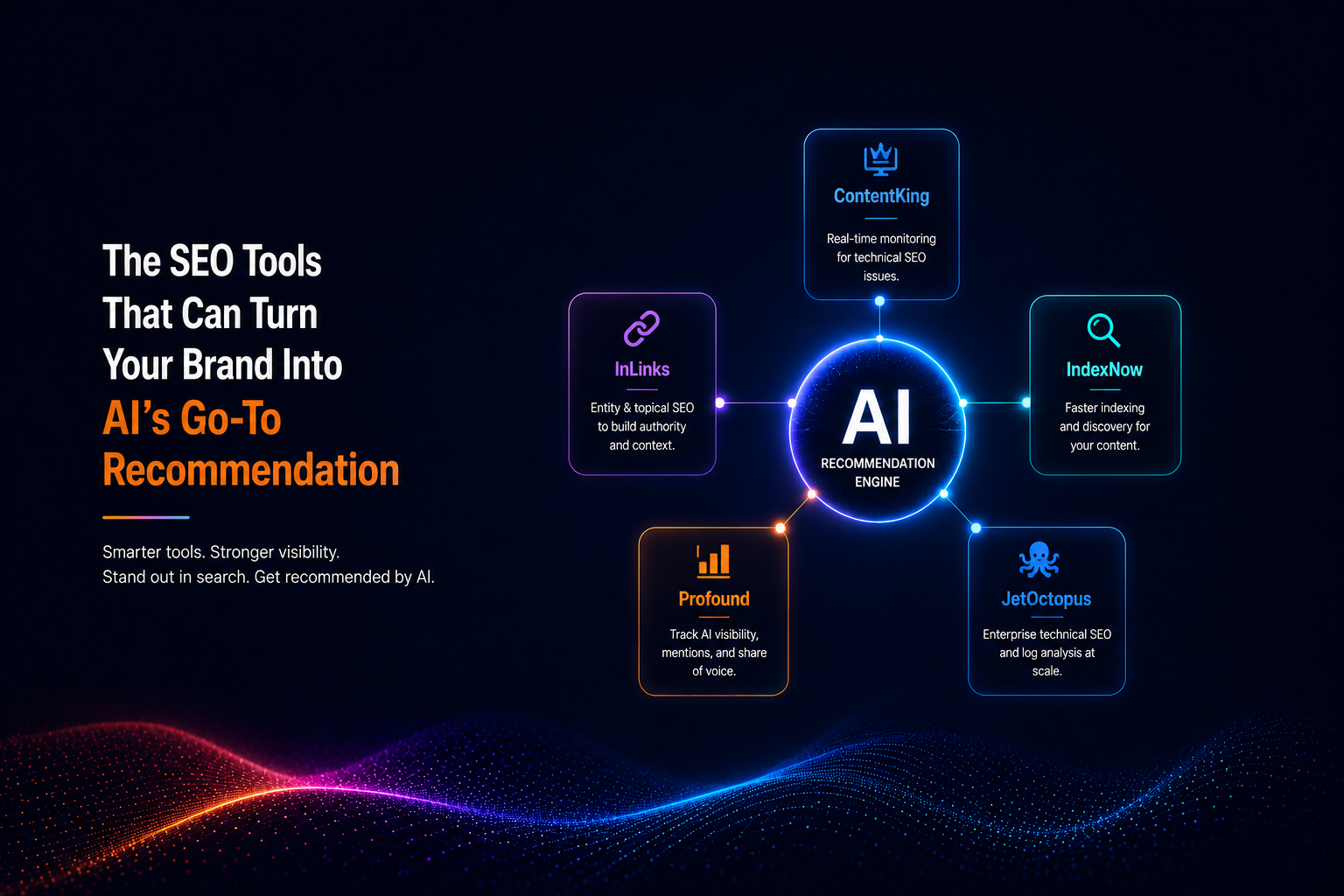
These five tools reflect that evolution. ContentKing focuses on real-time website health, InLinks strengthens semantic understanding, IndexNow improves content discovery, Profound introduces AI visibility measurement, and JetOctopus helps enterprise teams optimize large-scale websites with greater precision.
None of these tools promise overnight rankings, nor should they. Instead, they solve practical problems that are becoming increasingly important as search grows more sophisticated.
For SEO professionals looking beyond keywords and backlinks, exploring these underrated platforms may offer fresh opportunities to improve visibility—not just in search engines, but wherever users are discovering information next.
As AI continues to reshape the way people search, the brands that invest in smarter, more adaptable SEO workflows today will be the ones AI is most likely to understand, trust, and recommend tomorrow.