The Future of Tools: How Smart Tech Will Reshape Business Productivity in 2030

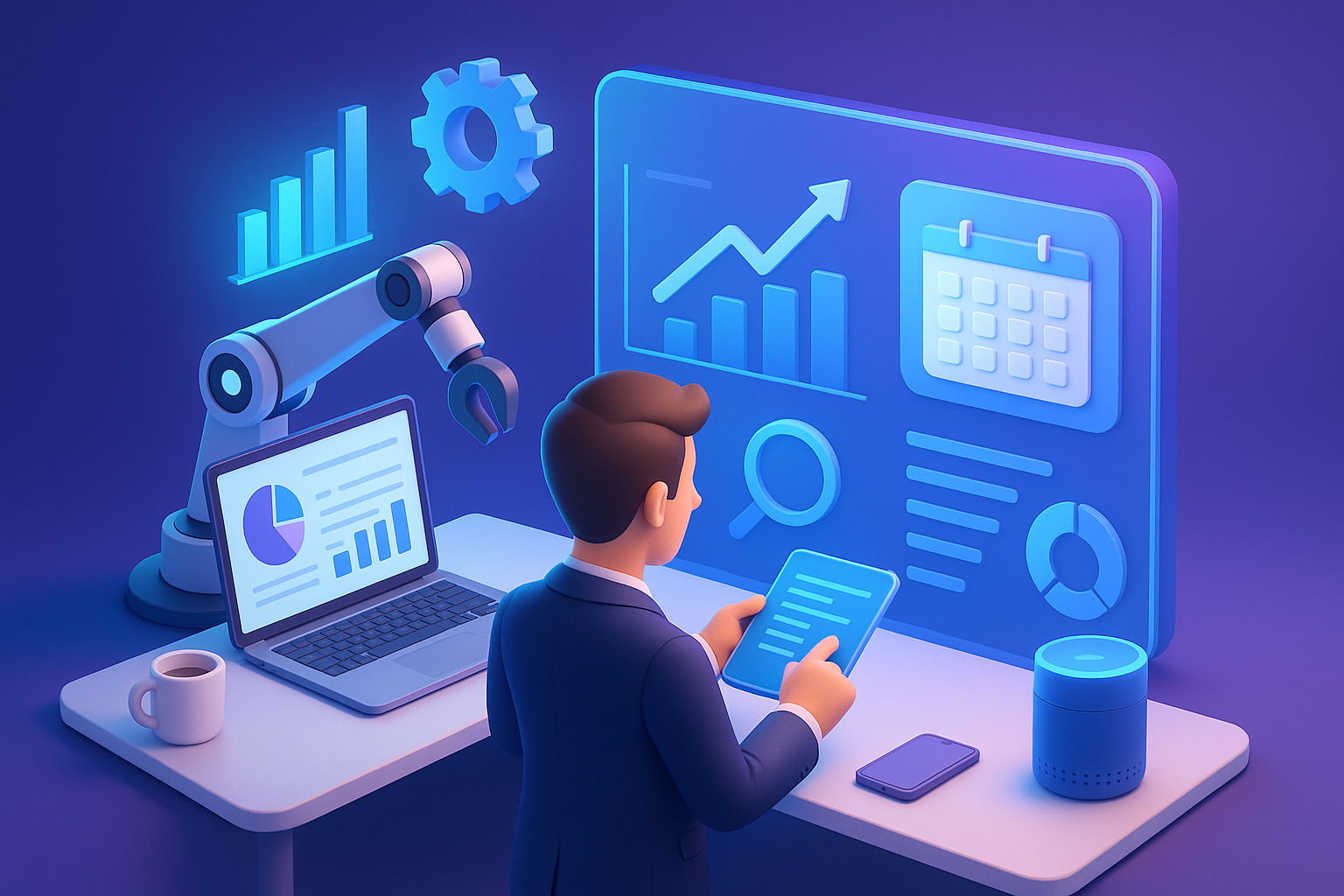
The world of business tools is evolving faster than ever. As organizations move toward automation, AI-powered insights, and hyper-personalized workflows, the tools of the future will look dramatically different from what we use today. The next decade will redefine how teams collaborate, make decisions, and scale operations.
At ToolsMetric, we study the evolution of SaaS platforms, productivity ecosystems, and MarTech/FinTech solutions. This blog explores the future of tools by 2030, the technologies shaping them, and what businesses need to prepare for.
1. AI-Driven Everything: Tools Will Think for You
AI won’t just assist — it will proactively run tasks, predict outcomes, and optimize workflows.
What future tools will do:
-
Auto-generate content, reports, marketing assets, and insights
-
Predict customer behavior and recommend next steps
-
Diagnose operational inefficiencies
-
Reduce human error with real-time corrections
AI will become the new operating system of business.
2. Hyper-Automation Will Replace Manual Workflows
In the next decade, nearly every repetitive task — from invoicing and CRM updates to campaign scheduling and forecasting — will be fully automated.
Expected transformations:
-
Zero manual data entry
-
Automated lead scoring & sales qualification
-
Instant financial reporting
-
Auto-updating project dashboards
Businesses adopting automation will save hundreds of hours each month.
Pro Tip: Automation strategies become more effective with high-quality leads. Learn how to accelerate pipelines with B2B content syndication in this guide from iTMunch →
Read B2B Content Syndication Guide
3. Cross-Tool Interoperability Will Become Standard
No more jumping across tools or fixing integration errors.
By 2030:
-
Tools will sync data in real time
-
Universal API standards will dominate
-
Cross-platform dashboards will become the norm
-
Tools will “talk” to each other to solve problems automatically
This creates a seamless digital ecosystem where work simply flows.
4. Personalization Engines Will Redefine User Experience
Future tools will adapt to each user’s work style.
What this means:
-
Dynamic UI that changes based on tasks
-
Personalized suggestions for workflow improvements
-
Role-based dashboards powered by behavioural data
Tools will smartly anticipate what you need before you even ask.
5. The Rise of Autonomous Tools
Beyond automation, autonomous tools will act without human prompts.
Examples:
-
A CRM that updates and scores leads automatically
-
A campaign manager that allocates budget to the best-performing channels
-
A cybersecurity tool that patches vulnerabilities instantly
Autonomous tools will create a “self-running company” environment.
6. Data Privacy Tools Will Strengthen
As data regulations tighten, tools of the future will embed:
-
Zero-trust security
-
On-device processing
-
Transparent data logs
-
AI-powered threat detection
Trust will become a competitive advantage for SaaS platforms.
7. The Tool Stack Will Shrink — But Become More Powerful
Companies are trimming unnecessary software and moving to:
-
All-in-one suites
-
Connected ecosystems
-
Modular, plug-and-play tools
-
Vertical SaaS (industry-specific tools)
The future will be about fewer tools, deeper capabilities.
8. Content & Marketing Tools Will Become Distribution-First
With noise increasing online, creation alone won’t be enough — distribution will become the king.
Tools will focus more on:
-
Smart content targeting
-
AI-led syndication networks
-
Predictive audience analytics
9. AR/VR Tools Will Enter Mainstream Business Workflows
By 2030:
-
Remote collaboration will include holographic meetings
-
Product demos will be conducted in immersive 3D
-
Training programs will shift into virtual environments
This will transform how companies onboard, sell, and train employees.
10. Decision Intelligence Tools Will Guide Business Strategy
Data-rich companies often struggle with interpretation. Decision intelligence tools will fix that by offering:
-
Actionable recommendations
-
Multi-scenario modeling
-
Automated risk detection
-
Predictive outcome simulations
These tools will become the “digital brain” of enterprises.
Conclusion: The Future Belongs to Smart, Connected, Autonomous Tools
The future of tools isn’t just about software — it’s about building intelligent, self-optimizing ecosystems that enable teams to move faster and operate smarter.
Businesses that embrace these transformations will:
-
Outperform competitors
-
Gain visibility faster
-
Reduce costs
-
Make better decisions
-
Scale without friction