AI-Powered Customer Support: From Chatbots to Emotional Intelligence in 2025

Introduction
Customer support has always been a cornerstone of business success. In a world where customer experience (CX) can make or break brand loyalty, companies can no longer rely on outdated methods to serve their customers. Enter Artificial Intelligence (AI).
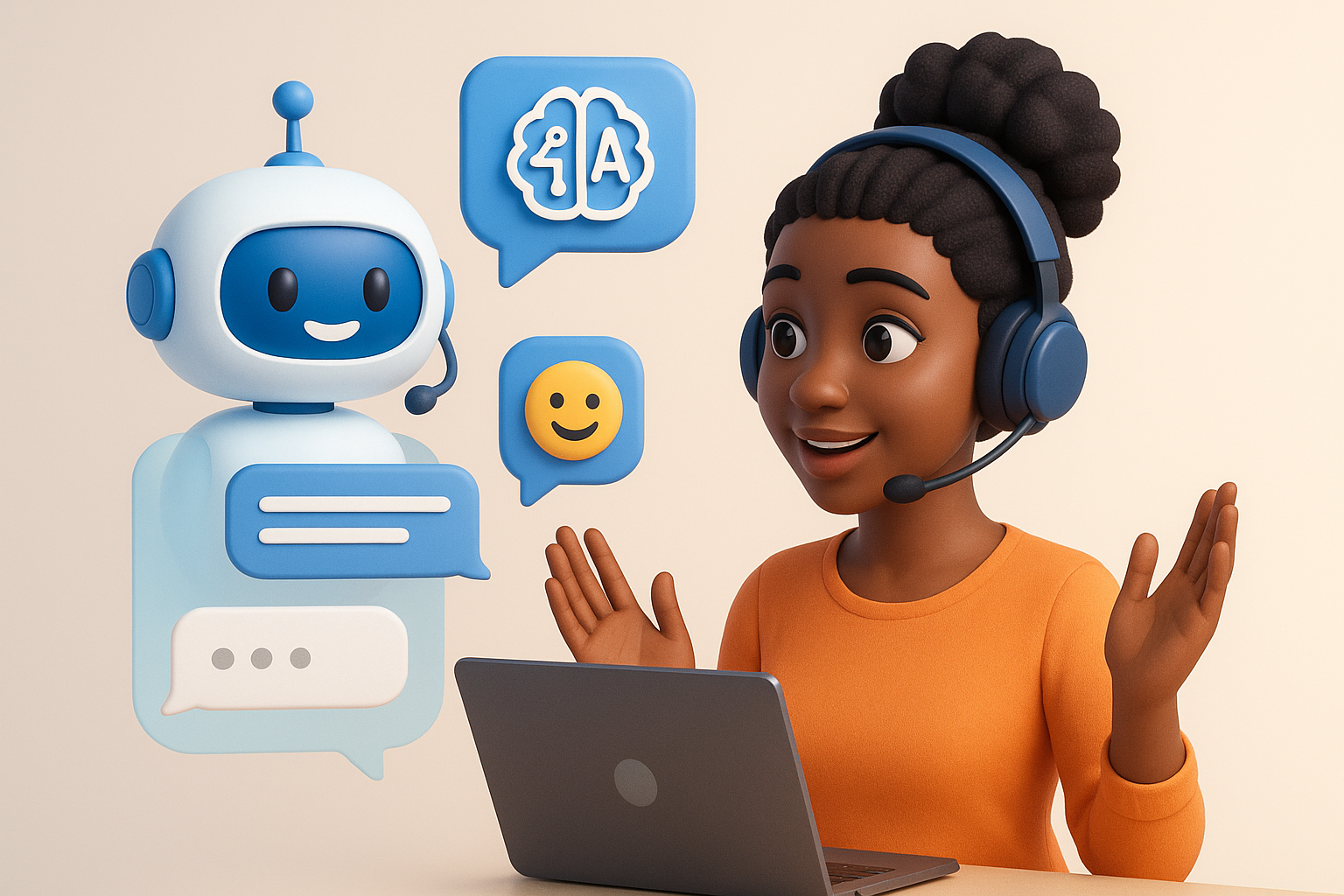
Over the past decade, AI-powered chatbots transformed how businesses handle customer inquiries. They reduced wait times, provided instant answers, and helped brands scale support operations without increasing headcount. But in 2025, the story doesn’t stop at automation. The next frontier is emotional intelligence—AI that not only responds to queries but also understands how customers feel.
This blog explores the evolution of AI in customer support, the technologies driving emotional intelligence, real-world use cases, and how businesses can implement this powerful shift.
The Era of Chatbots: Strengths and Limitations
Strengths of Chatbots
-
24/7 availability: Customers no longer wait for office hours.
-
Scalability: One chatbot can serve thousands simultaneously.
-
Cost-efficiency: Reduces reliance on large call centers.
-
Consistency: Provides standard answers without fatigue.
Limitations of Chatbots
Despite their usefulness, chatbots have limitations:
-
Struggle with complex or ambiguous queries.
-
Often fail to interpret customer frustration or urgency.
-
Provide rigid, scripted responses that feel impersonal.
By 2025, most businesses recognize that automation alone is not enough. Customers expect empathy, context, and human-like understanding.
From Chatbots to Emotional Intelligence
What Is Emotional AI?
Emotional AI (or affective computing) enables machines to recognize, interpret, and respond to human emotions. Instead of processing text alone, these systems analyze tone of voice, word choice, sentiment, and even facial expressions (in video-based support).
How Emotional Intelligence Changes Support
-
Detects frustration when a customer uses negative language or sharp tone.
-
Calms customers with empathetic responses, not robotic replies.
-
Triggers escalation to a human agent when emotional cues signal urgency.
-
Adapts language style to match the customer’s personality.
In short, emotional intelligence makes AI feel less like a machine and more like a helpful teammate.
Key Technologies Driving AI-Powered Support in 2025
-
Natural Language Processing (NLP):
Modern NLP models interpret not only words but also intent and context. -
Sentiment Analysis:
AI analyzes messages to identify emotions such as anger, satisfaction, or confusion. -
Voice and Speech Recognition:
Voice AI detects tone, pitch, and stress levels to gauge customer mood. -
Generative AI:
Helps create personalized, human-like responses in real time. -
AI + CRM Integration:
Customer history, preferences, and purchase data are merged with emotional cues for hyper-personalized support.
Real-World Use Cases of AI Emotional Intelligence
1. E-commerce
AI detects frustration in chat and immediately escalates the case to a live agent. This reduces cart abandonment and improves customer satisfaction.
2. Banking and FinTech
Voice AI in call centers identifies anxious tones during fraud reports and switches to empathetic, reassuring responses.
3. Telecom
When customers express dissatisfaction over billing, AI sentiment analysis helps agents prepare tailored retention offers.
4. Healthcare
Emotionally intelligent AI supports patients by detecting stress in messages and providing calm, encouraging responses before connecting to a doctor.
Benefits for Businesses
-
Higher Customer Satisfaction (CSAT): Empathetic support improves overall experience.
-
Faster Resolution: Emotional cues help AI prioritize urgent cases.
-
Reduced Churn: Proactive emotional intelligence improves loyalty.
-
Operational Efficiency: AI handles routine cases, while humans focus on complex, high-emotion scenarios.
Challenges and Risks
1. Privacy Concerns
Analyzing tone, biometrics, or facial data raises data security issues.
2. False Positives
AI may misinterpret sarcasm or cultural nuances, leading to incorrect responses.
3. Over-Reliance on AI
Businesses risk losing the “human touch” if they replace agents entirely.
4. Implementation Costs
Advanced AI support platforms require significant investment and training.
Best Practices for Implementation
-
Start with Hybrid Models: Combine AI for routine tasks and humans for complex, emotional cases.
-
Transparency: Inform customers they’re interacting with AI.
-
Continuous Training: Use customer feedback to refine emotional detection models.
-
Privacy-First Approach: Comply with GDPR and other data protection laws.
-
Measure and Optimize: Track KPIs like CSAT, resolution time, and sentiment improvement.
KPIs for Measuring Success
-
Customer Satisfaction (CSAT): Did AI improve customer happiness?
-
First Contact Resolution (FCR): Are issues solved without escalation?
-
Sentiment Shift: Did negative emotions improve after interaction?
-
Average Handle Time (AHT): Are cases resolved faster?
-
Retention Rates: Are happier customers staying longer?
The Future of AI Customer Support
By 2030, customer support will likely evolve into predictive, proactive experiences. AI will not just react but anticipate problems before they arise.
Future Trends
-
Voice Assistants with Emotional Awareness: More natural, empathetic voice interactions.
-
Omni-channel AI Support: Unified emotional intelligence across chat, voice, video, and AR.
-
Hyper-Personalization: AI predicts customer needs based on mood, history, and preferences.
-
AI as a Co-Agent: Instead of replacing humans, AI will support agents with real-time recommendations.
Conclusion
AI-powered customer support has come a long way—from basic chatbots to systems capable of understanding human emotions. In 2025, businesses that adopt emotionally intelligent AI gain a clear competitive edge: faster resolutions, happier customers, and stronger brand loyalty.
However, success lies in balance—leveraging AI’s power without losing the empathy and trust that only humans can provide.