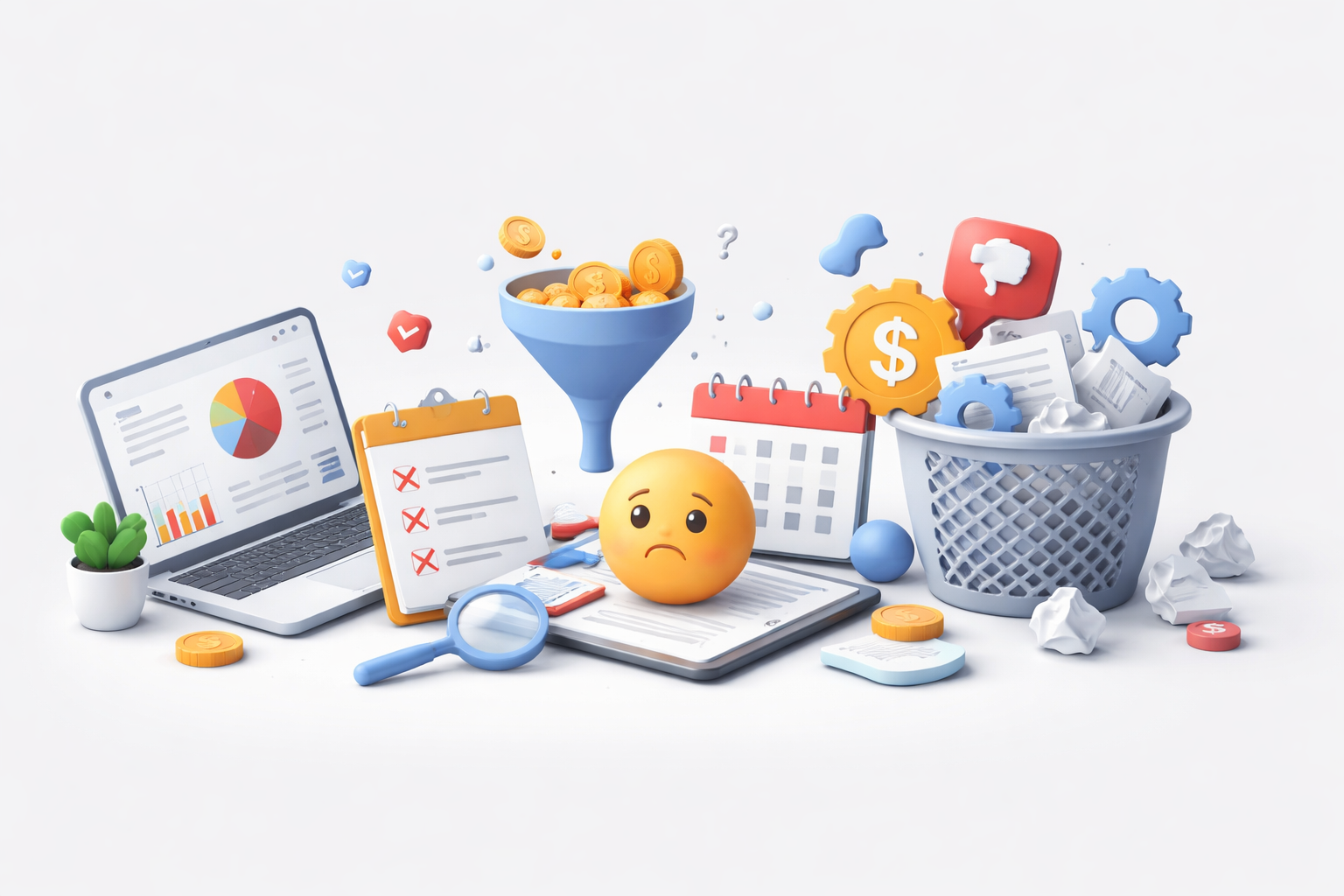
Every B2B team has that tool.
The one everyone was excited about.
The one with the shiny demo.
The one that now sits quietly… unused.
In 2026, tool regret is becoming a serious operational problem—not because tools are bad, but because teams buy for promise, not fit.
Here’s where most B2B teams go wrong.
1. All-in-One Platforms That Try to Do Everything
These tools promise:
-
CRM
-
Marketing automation
-
Analytics
-
Customer success
Reality:
They do everything okay and nothing exceptionally.
Why teams regret it
What to choose instead
2. Overengineered CRMs
Enterprise CRMs look powerful—until teams have to use them.
Common issues
-
Long setup cycles
-
Heavy admin dependency
-
Low sales adoption
Sales teams don’t want more controls—they want clarity.
Better alternative
3. Analytics Tools With Too Many Dashboards
More dashboards ≠ better insights.
Why they fail
What works better
4. AI Tools Without Real Use Cases
AI sells fast. Adoption doesn’t.
The regret
-
Vague “AI-powered” promises
-
No clear workflow integration
-
Results that are hard to measure
What teams actually need
5. Custom-Built Internal Tools
It sounds smart:
“Let’s build our own.”
Why it backfires
Internal tools age fast—and cost more than expected.
6. Tools Bought for Leadership, Not Users
Some tools are purchased to impress stakeholders, not serve teams.
Symptoms
-
Leadership loves it
-
Teams avoid it
-
Adoption drops quietly
No tool survives poor user buy-in.
7. Tools Added Without Removing Old Ones
Tool sprawl creates hidden chaos.
Results
-
Duplicate workflows
-
Confusing data sources
-
Increased cognitive load
More tools don’t equal more productivity.
Why Tool Regret Is Growing in B2B
Because buying decisions are still driven by:
-
Demos instead of daily use
-
Brand names instead of workflows
-
Feature lists instead of outcomes
The cost isn’t just money—it’s lost time and momentum.
How ToolsMetric Helps Teams Avoid Regret
ToolsMetric focuses on:
So teams choose tools they’ll actually use—six months later.
Final Take
If a tool needs training sessions to justify its value—it’s probably the wrong one.
The best B2B tools don’t impress on day one.
They prove themselves on day ninety.
Discover smarter, regret-free tools on ToolsMetric 🚀