AI-Powered IT Security Tools: How Real-Time Threat Detection is Redefining Enterprise Protection in 2025

Introduction
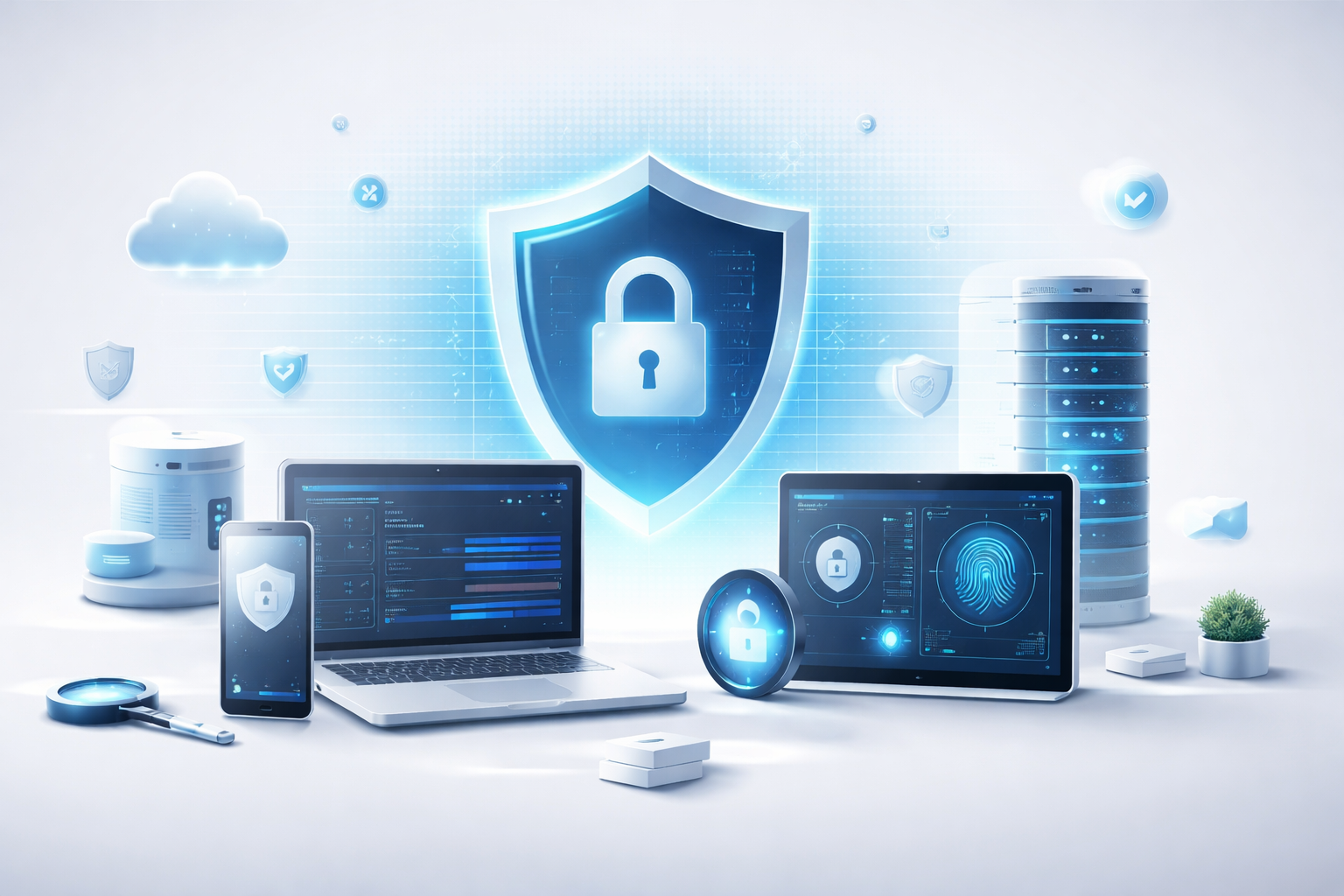
In 2025, enterprise IT security is more complex and critical than ever. Traditional, rule-based security tools are often reactive, detecting threats only after a breach or anomaly occurs. Today, AI-powered security platforms are changing the game by providing real-time threat detection, automated response, and predictive insights.
These tools don’t just alert IT teams—they analyze vast amounts of data across networks, endpoints, and cloud environments, identifying suspicious behavior, preventing breaches, and enabling proactive protection.
Why Real-Time AI Security Matters
Modern enterprises face increasingly sophisticated attacks: ransomware, phishing, insider threats, and cloud misconfigurations. Key challenges include:
-
Volume and complexity of threats: Manual monitoring is insufficient.
-
Delayed response times: Traditional tools trigger alerts after damage occurs.
-
Resource constraints: Security teams often struggle to investigate every alert.
Real-time AI security tools address these by:
-
Continuously monitoring networks and systems for anomalies.
-
Prioritizing high-risk threats to reduce alert fatigue.
-
Automatically responding to incidents where possible.
Top AI Security Tools for Modern Enterprises
1. Darktrace – Autonomous Threat Detection
Darktrace leverages AI to detect and respond to threats in real time across networks, cloud, and SaaS applications.
Why it matters:
-
Identifies unusual behavior patterns automatically
-
Provides autonomous responses to contain threats
-
Continuously learns from evolving enterprise environments
2. Vectra AI – Real-Time Network Threat Hunting
Vectra AI focuses on network-level visibility, detecting hidden attacks across internal and cloud traffic.
Why it matters:
-
Provides live detection of advanced threats
-
Automates threat investigation workflows
-
Helps security teams focus on high-impact incidents
3. Sift Security – AI for Fraud and Account Protection
Sift applies machine learning to detect fraud, account takeover, and suspicious user behavior.
Why it matters:
-
Reduces financial and reputational risk
-
Monitors activity across multiple platforms in real time
-
Integrates easily with existing security infrastructure
4. Cynet – Automated Threat Response Platform
Cynet provides end-to-end detection and response for endpoints, network, and cloud workloads.
Why it matters:
-
Correlates incidents automatically across systems
-
Provides remediation suggestions and automated actions
-
Reduces mean-time-to-resolution (MTTR) for security events
5. Orca Security – Cloud Workload AI Monitoring
Orca Security uses AI to continuously scan cloud environments for vulnerabilities, misconfigurations, and attacks.
Why it matters:
-
Delivers full-stack visibility without agents
-
Detects risks in real time before they escalate
-
Supports multi-cloud enterprises efficiently
Benefits of AI Security Tools Over Traditional Solutions
-
Proactive protection: Identify threats before they cause damage.
-
Reduced alert fatigue: AI filters out false positives and prioritizes critical alerts.
-
Faster response: Automated actions reduce MTTR and operational load.
-
Scalability: Handle complex, distributed IT environments effectively.
-
Continuous learning: AI adapts to new threats without manual rule updates.
Choosing the Right AI Security Tool
When evaluating platforms, consider:
-
Coverage: Endpoints, networks, cloud, SaaS, or hybrid environments.
-
Integration: Compatibility with existing SIEM, ITSM, and monitoring tools.
-
AI sophistication: Anomaly detection, predictive capabilities, and automation.
-
Ease of deployment: Tools should reduce workload, not complicate it.
-
Compliance support: Helps meet regulatory and security standards.
A phased rollout with pilot testing can help validate effectiveness before enterprise-wide adoption.
Final Thoughts
AI-powered security tools are redefining enterprise protection in 2025 by combining real-time monitoring, predictive analytics, and automated response. Organizations adopting these solutions gain faster threat detection, reduced operational strain, and stronger defenses against increasingly sophisticated cyber threats.
For IT leaders and security teams, investing in AI-driven security isn’t just a technological upgrade—it’s a strategic move toward resilient, future-proof enterprise security.